
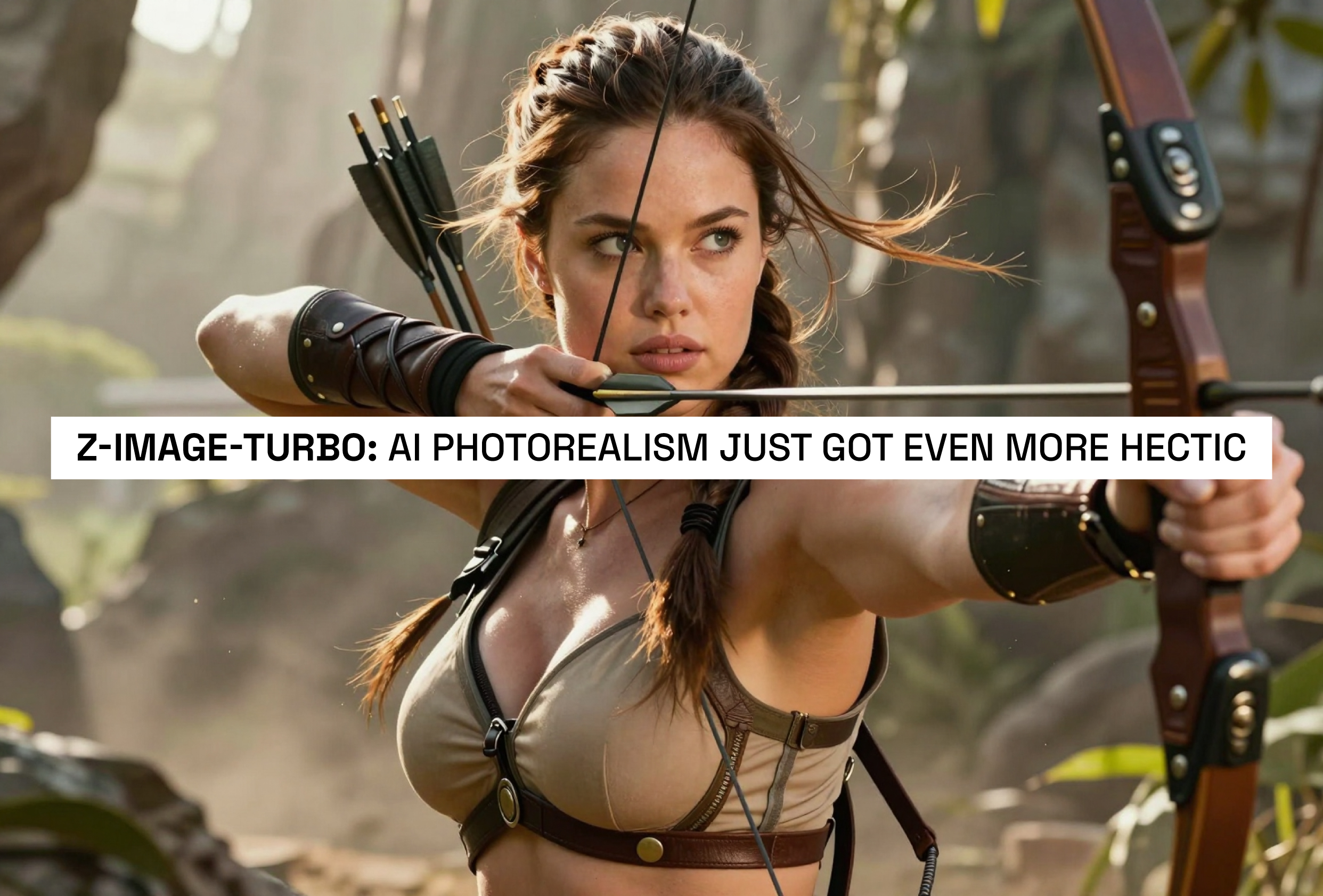
While the AI world obsesses over the next “Pro” release — Nano-Banana-Pro this, Flux 2 that — a lesser-known model just dropped and has been quietly building a cult following among creators who care less about hype and more about results.
Enter Z-Image-Turbo — Tongyi-MAI’s 6-billion-parameter text-to-image model built not for noise, but for nuance. It’s the sleeper hit that delivers cinematic, hyper-real visuals at a speed most commercial tools can’t touch. And the best part? It’s free.
Here’s my take:
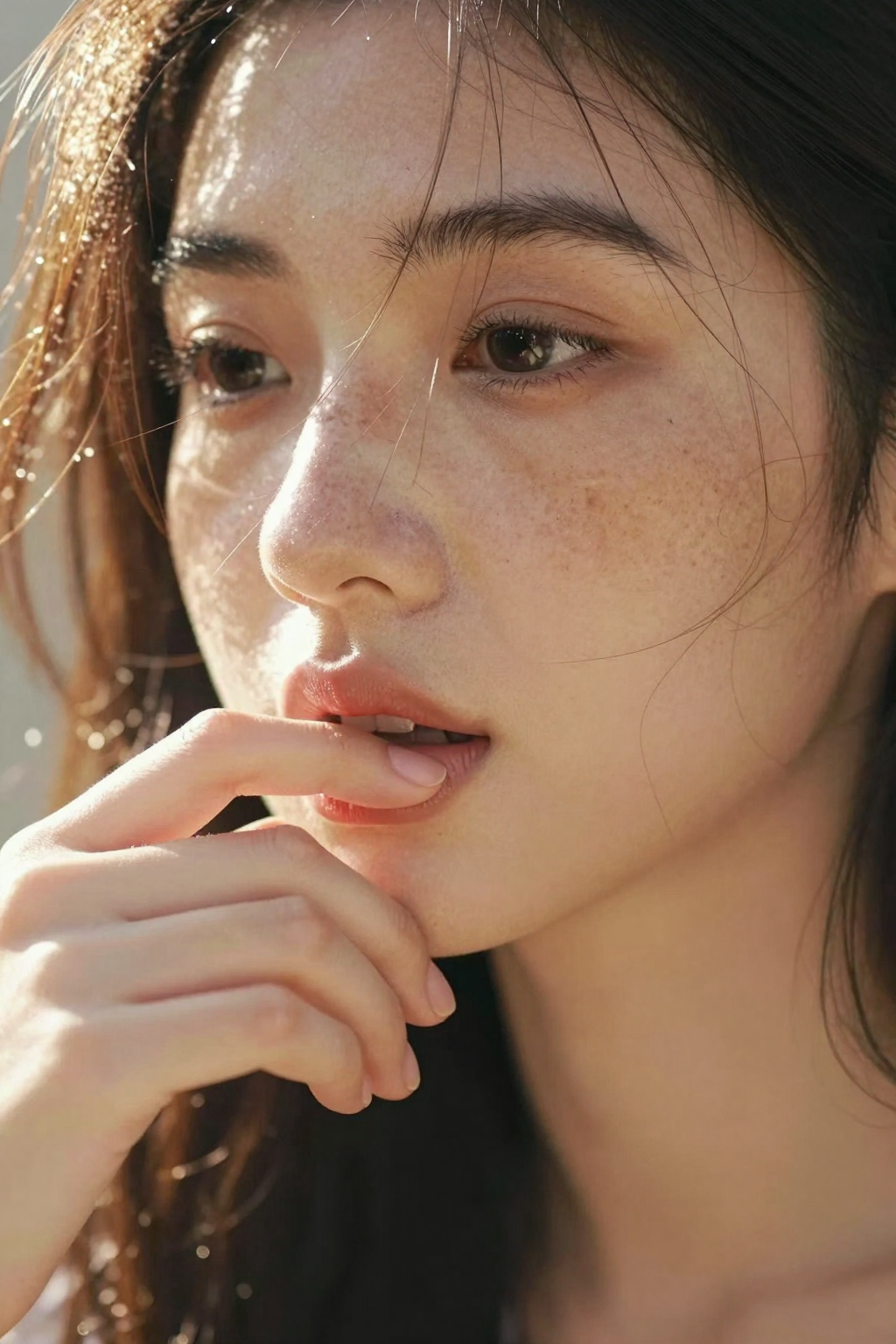
Prompt // Ultra-realistic close-up portrait of a young woman under warm sunlight, lightly freckled skin, natural texture and soft imperfections visible. Loose strands of hair catch the light in front of her face. She has a contemplative, expressive look with parted lips and fingers gently resting near her mouth. The image feels spontaneous and alive — sunlit, slightly overexposed in highlights with visible grain. Capture the warmth of golden daylight, shallow depth of field, and analog-film-style tones. The mood is sensual but natural, with cinematic micro-contrast and soft falloff across the cheeks. Shot on a 50 mm lens, f/1.4, handheld, film-like realism with authentic skin detail and colour variance. Style tags: sun-kissed realism, cinematic light, film grain, soft imperfections, tactile skin texture, natural freckles, lens flare, analog tone, shallow DOF, RAW realism
The Engine Behind the Aesthetic
Z-Image-Turbo isn’t trying to reinvent diffusion — it’s refining it. Where most models need 20–50 sampling steps to deliver a clean render, Turbo needs just eight. The result? Sub-second image generation that still looks like it was captured on a full-frame sensor at golden hour.
Under the hood, it’s a 6B-parameter architecture engineered for production environments — meaning you can run it comfortably on a 16 GB GPU and still get professional-grade results. It supports bilingual prompts (English and Chinese) and even handles on-image text rendering with impressive accuracy.
In a world where high-end image synthesis is drifting toward bloated checkpoints and cloud-locked ecosystems, Z-Image-Turbo feels refreshingly practical. It’s lightweight, fast, and grounded in optical realism rather than digital gloss.
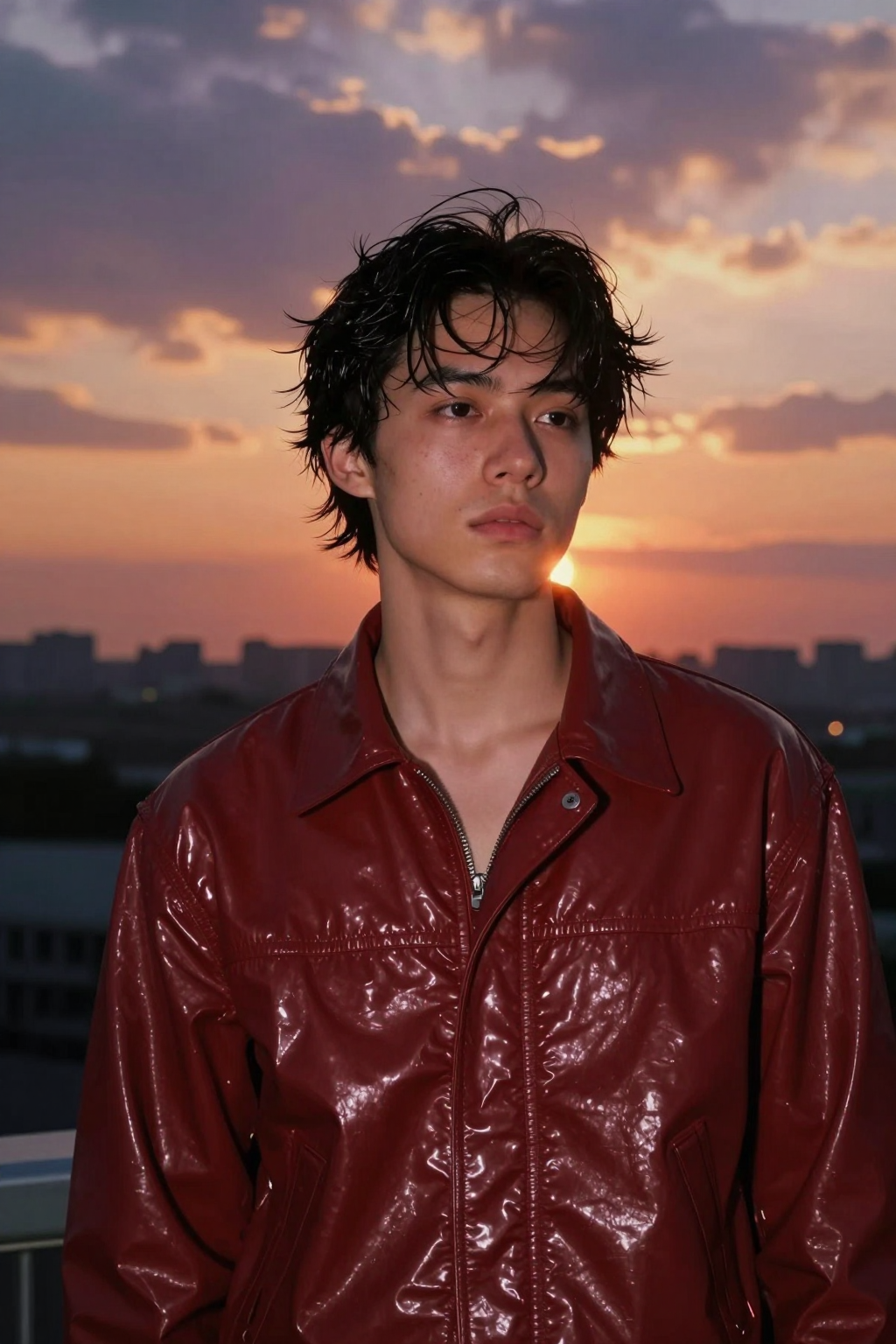
Prompt // Cinematic portrait of a young man standing outdoors during golden hour, wearing a deep cherry red vinyl jacket with soft glossy reflections. His hair is slightly tousled, damp, and backlit by the setting sun. The expression is calm, introspective, and natural. Warm orange and purple clouds stretch across the sky with gentle atmospheric haze. The background fades into a dark, blurred city silhouette below the glowing horizon. Lighting feels organic and uneven, with lens flare catching the vinyl surface. Skin tone is warm and realistic, showing subtle texture and pores under the soft light. Shot on a 50 mm lens, f/1.8, handheld, filmic contrast, shallow depth of field. Capture the feel of 35 mm analog photography — imperfect, grain-kissed, with breathing highlights and real-world tonal falloff. Style tags: cinematic realism, analog film tone, moody golden hour, tactile texture, natural light falloff, lens flare, warm tones, shallow DOF, editorial portrait, unretouched authenticity
The Look — Real vs “Real”
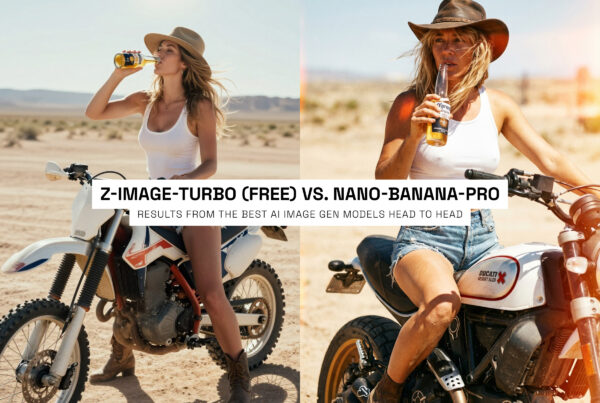
At first glance, Nano-Banana-Pro seems like the one chasing realism. It produces crisp, retouched, commercial-ready output — the kind you’d expect from a high-budget studio shoot. Flux 2 pushes that even further, favouring cinematic sharpness and stylised edge control that practically screams “AI perfect.”
But Z-Image-Turbo approaches the problem differently. It’s not about perfection — it’s about believability.
The tones are warmer.
The shadows breathe.
The light falloff feels optical, not simulated.
While Nano-Banana-Pro delivers that glossy, hyper-processed look that’s ideal for product ads and magazine spreads, Z-Image-Turbo leans into natural imperfections — texture, asymmetry, and atmosphere. It captures that “shot on location” energy that feels authentic, like a test roll of Portra 400 before retouching ever touched the frame.
Flux 2 might dominate the cinematic bracket, but Turbo sits squarely in the photographic realism lane — fast, balanced, and faithful to prompt.
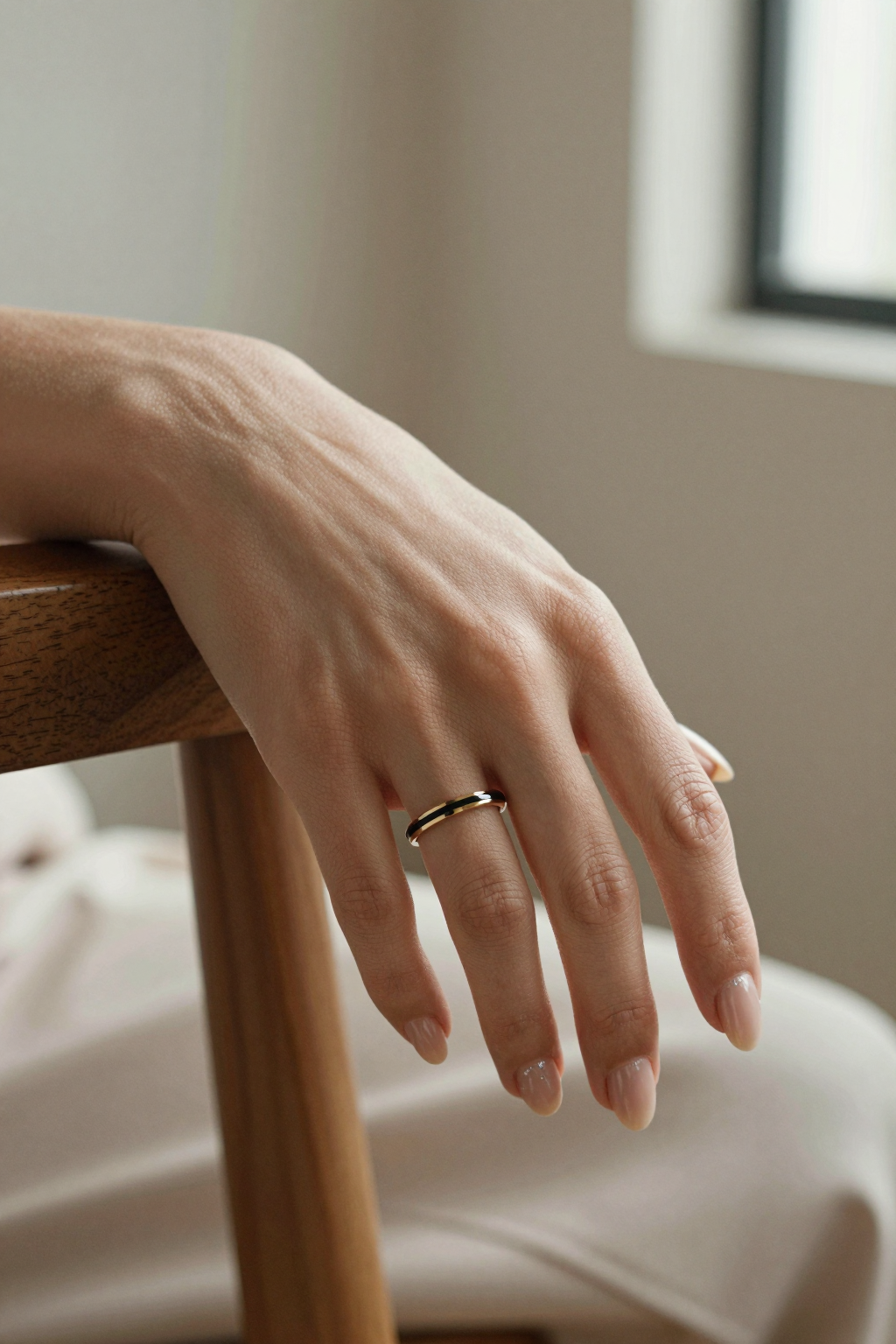
Prompt // Close-up editorial photograph of a woman’s hand resting gracefully on a wooden chair. Soft morning light from a nearby window creates gentle highlights and natural shadow falloff across her skin. The hand wears a minimal black and gold band ring with a subtle reflection on its polished surface. Fingernails are almond-shaped with a natural gloss and delicate silver glitter accents. The background is softly blurred in neutral beige tones, evoking a calm, modern interior. Skin texture appears smooth but realistic, showing faint veins and warmth under the light. The overall tone feels quiet, tactile, and cinematic — shot on a 50 mm lens at f/2.0, handheld, on 35 mm film stock.
Style tags: cinematic realism, soft natural light, editorial jewelry photography, neutral tones, shallow depth of field, warm highlights, analog texture, lifestyle minimalism, tactile detail
Why Creators Are Switching
Speed and realism are obvious drawcards, but Turbo’s real strength lies in prompt fidelity — it listens.
Where Nano and Flux models occasionally improvise (interpreting prompts creatively but drifting from intent), Z-Image-Turbo remains remarkably obedient. When you ask for “moody backlight through sheer curtains at 4 PM,” you get exactly that — not a stylised fantasy reinterpretation.
For agencies and brands where consistency and brand safety matter, that control is invaluable. You can recreate shots with a seed value, fine-tune variations, or scale bulk generation pipelines without chasing randomness.
At SOCIALFUEL™, we’ve been testing Turbo across everything from beauty campaigns and product hero shots to lifestyle concepts and cinematic portraits — and it keeps surprising us. It’s production-ready, visually coherent, and emotionally grounded.
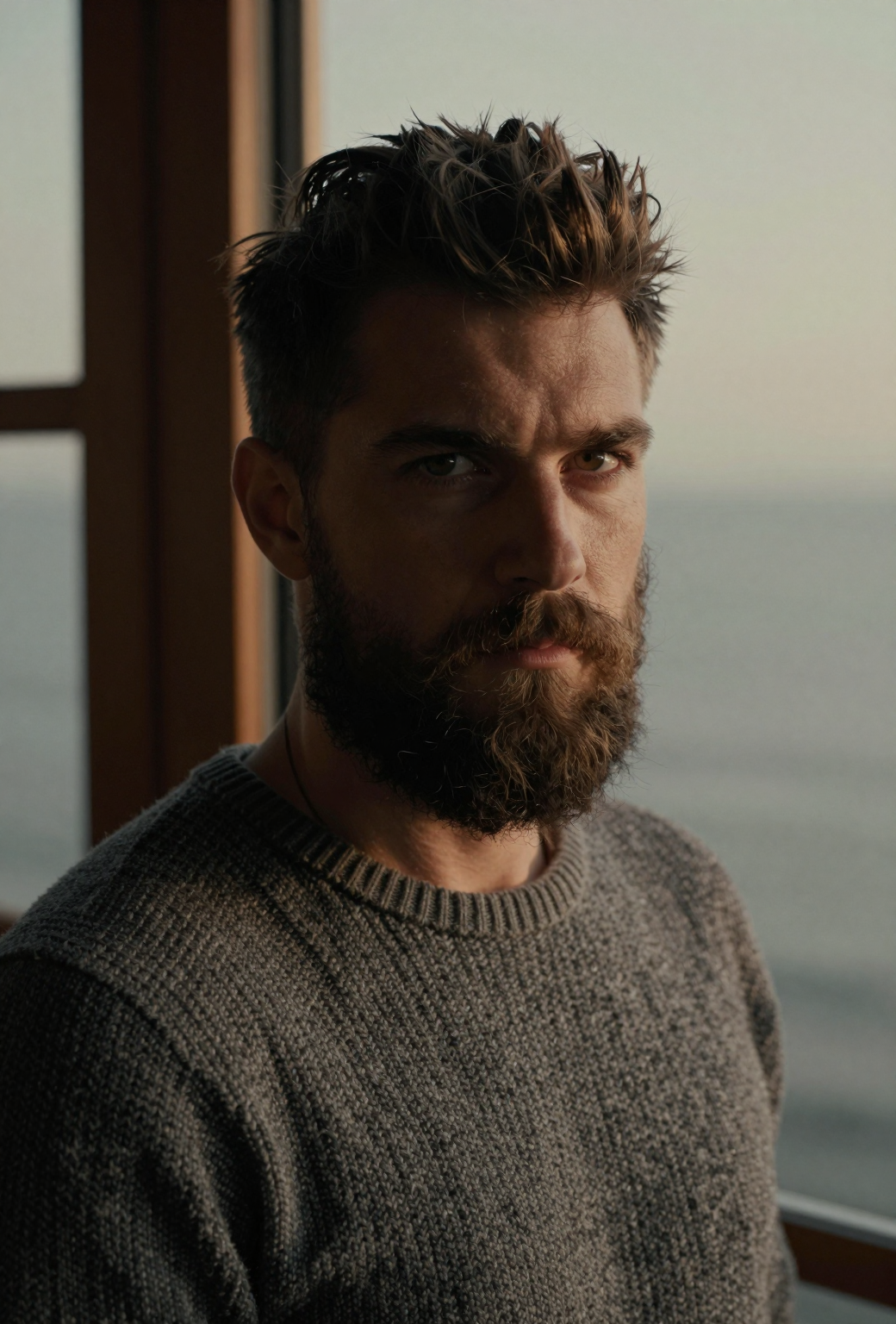
Hyper-realistic close up portrait of a rugged maritime man with a thick dark beard and styled hair. He wears a heavy woolen grey sweater with visible coarse texture. The lighting is soft, directional, moody and warm — like northern winter sunlight through a large timber maritime window. He gazes into the camera, his expression is intense and stoic, eyes slightly narrowed, conveying quiet strength. Background is a muted, neutral gradient (warm-grey tones), shallow depth of field. The image feels raw, cinematic, and tactile — film grain and contrast preserved, natural color grading with desaturated shadows and warm highlights. Shot on a 50 mm lens, f/1.8, high contrast with subtle vignetting and lens falloff. Capture the authenticity of analog film and skin texture — avoid over-smoothing or digital perfection
The New Standard for AI Photographers
Z-Image-Turbo represents a turning point in image synthesis: the moment AI stopped trying to look real and started feeling real. It’s less like a machine rendering an image — and more like a lens seeing one.
For designers, marketers, and creators who crave that subtle imperfection — the human fingerprint that separates a technically perfect render from a photograph that actually moves you — Turbo is a serious contender.
And as AI prompting specialists, we’ve found that the more we work with it, the more it rewards a refined touch. It’s not about stuffing prompts with adjectives or cinematic jargon — it’s about understanding light, texture, and mood. When you speak its language, it gives you gold.
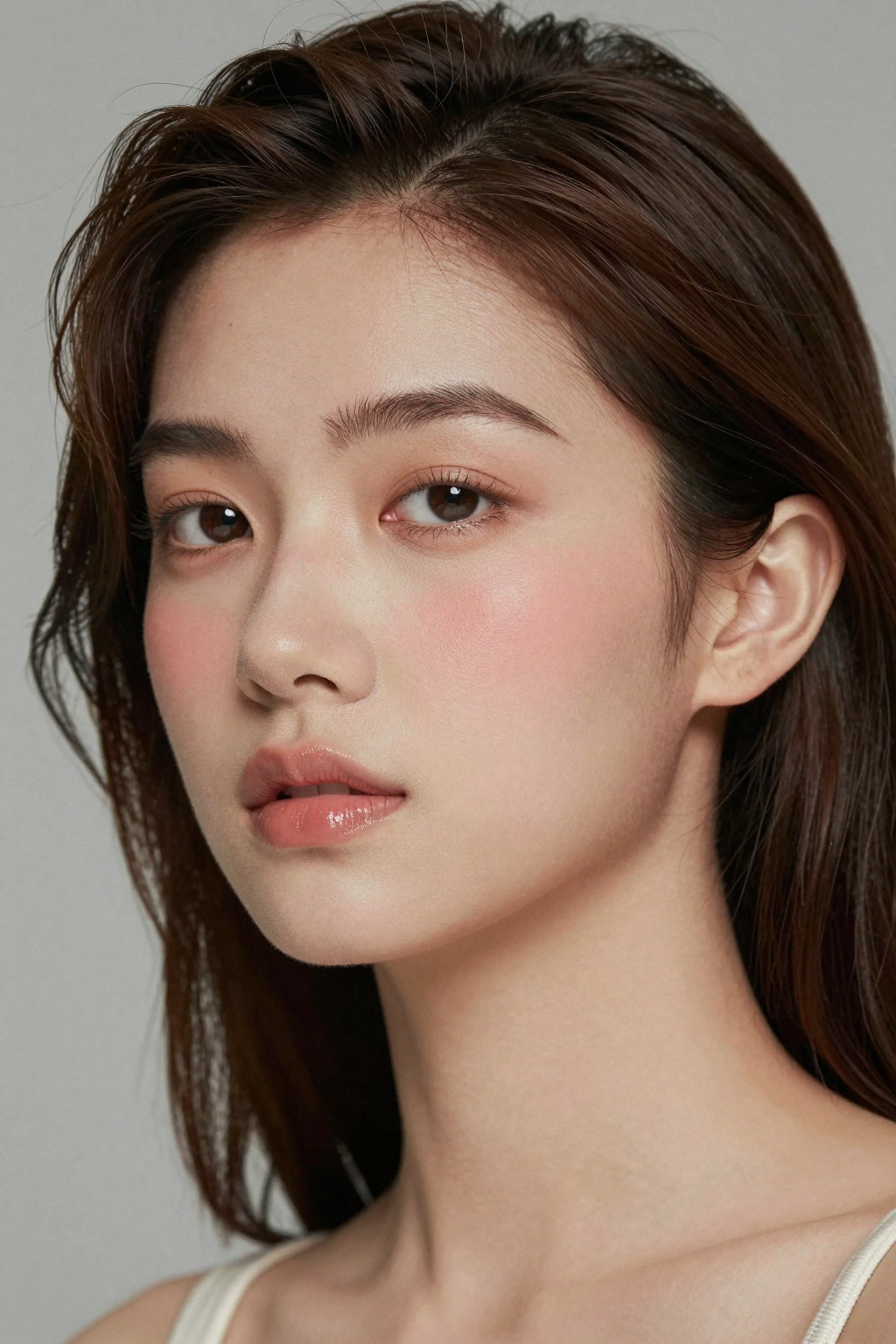
Soft daylight portrait of a beautiful young woman with clean makeup, smooth skin texture, natural blush tones, glossy lips, and neat hair framing the face. Studio background in neutral grey, ultra-realistic detail, subtle film grain, captured with a 50 mm lens at f/2.0, editorial retro aesthetic
Your Turn
We’ve run the comparisons, but we want your eyes on it too.
Take a look at the test images in our blog feed — identical prompts, different models — and tell us what you see. Does Z-Image-Turbo’s natural realism win you over, or does Nano-Banana’s polish still edge it out?
Drop your thoughts in the comments below — this debate’s just getting started.
Z-Image-Turbo: real, fast, and finally feeling human.